
Now Reading: He Did Not Wait for a Role. He Built His Own Lane: The Rise of Ibraheem Lateef Adebayo
-
01
He Did Not Wait for a Role. He Built His Own Lane: The Rise of Ibraheem Lateef Adebayo
He Did Not Wait for a Role. He Built His Own Lane: The Rise of Ibraheem Lateef Adebayo

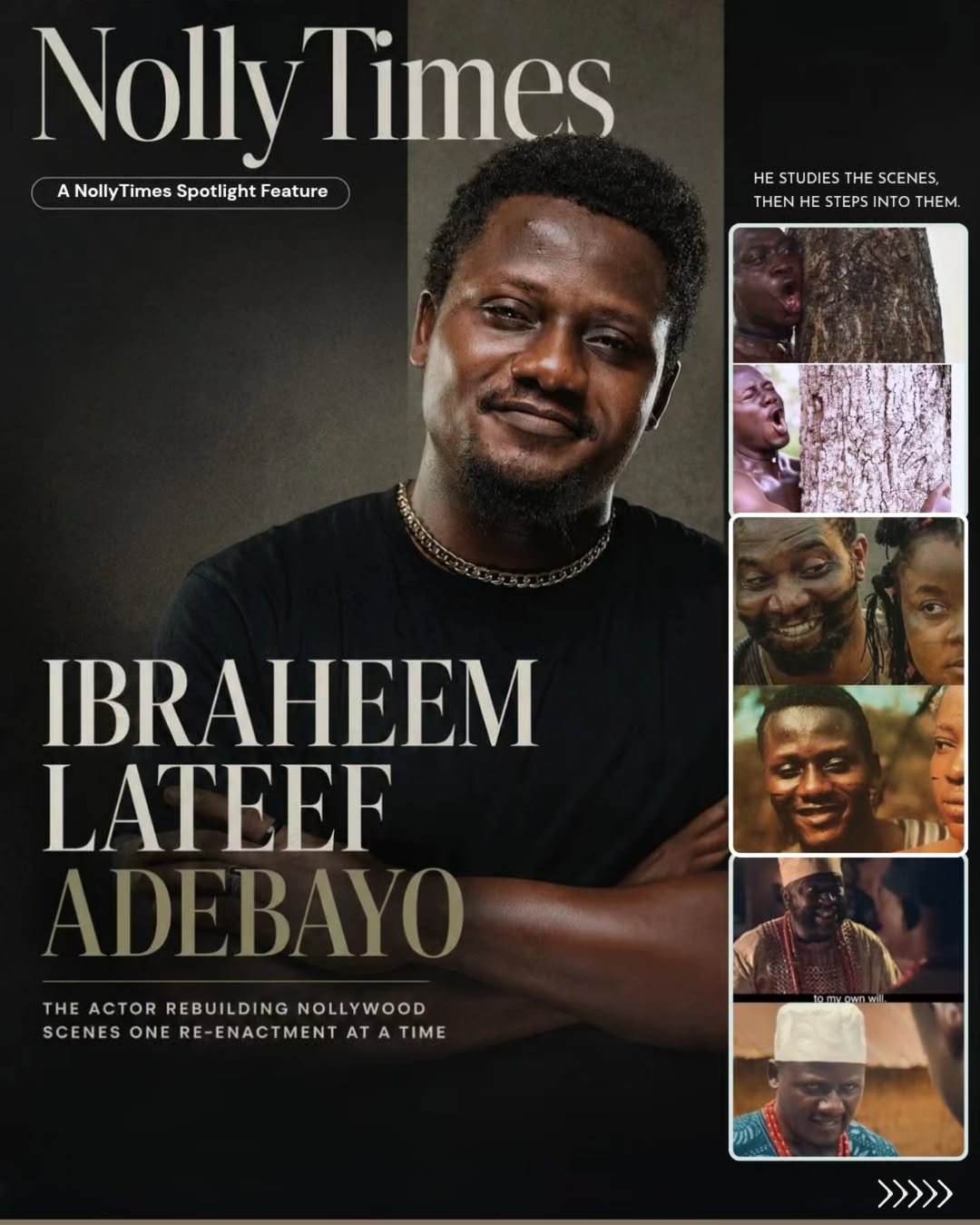
Before the film credits and the screen roles, there was a decision. Ibraheem Lateef Adebayo looked at the space available to him and chose to make his own rather than wait for someone to hand it over.
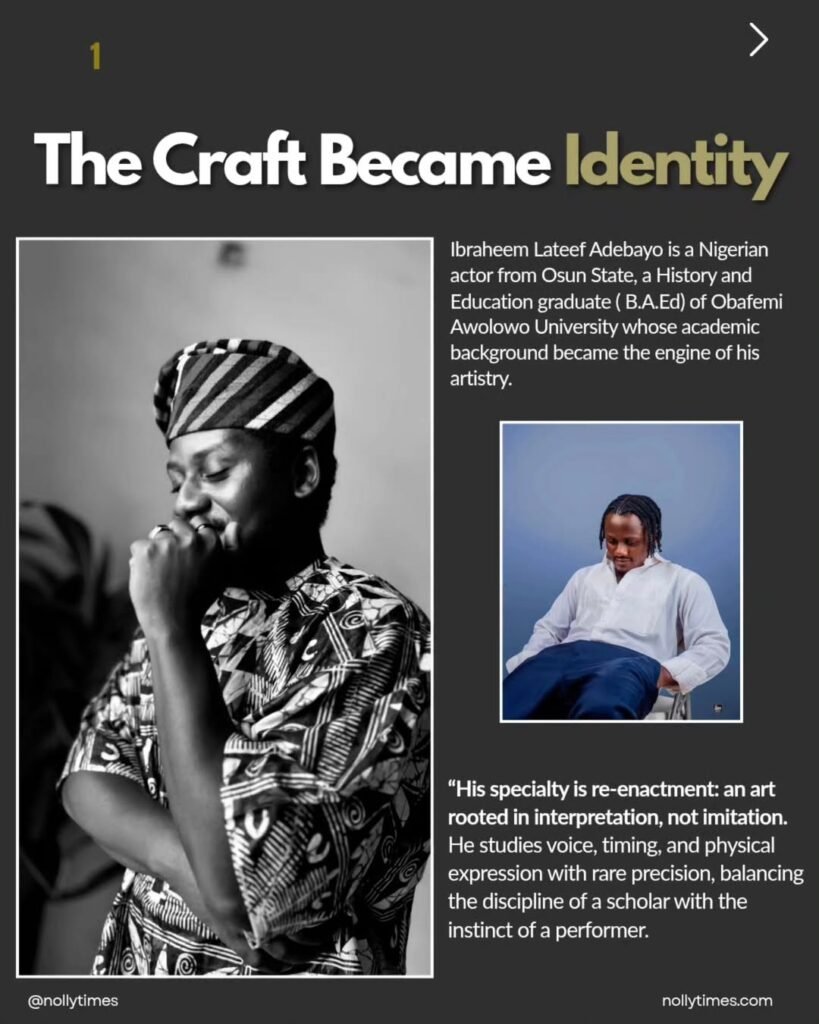
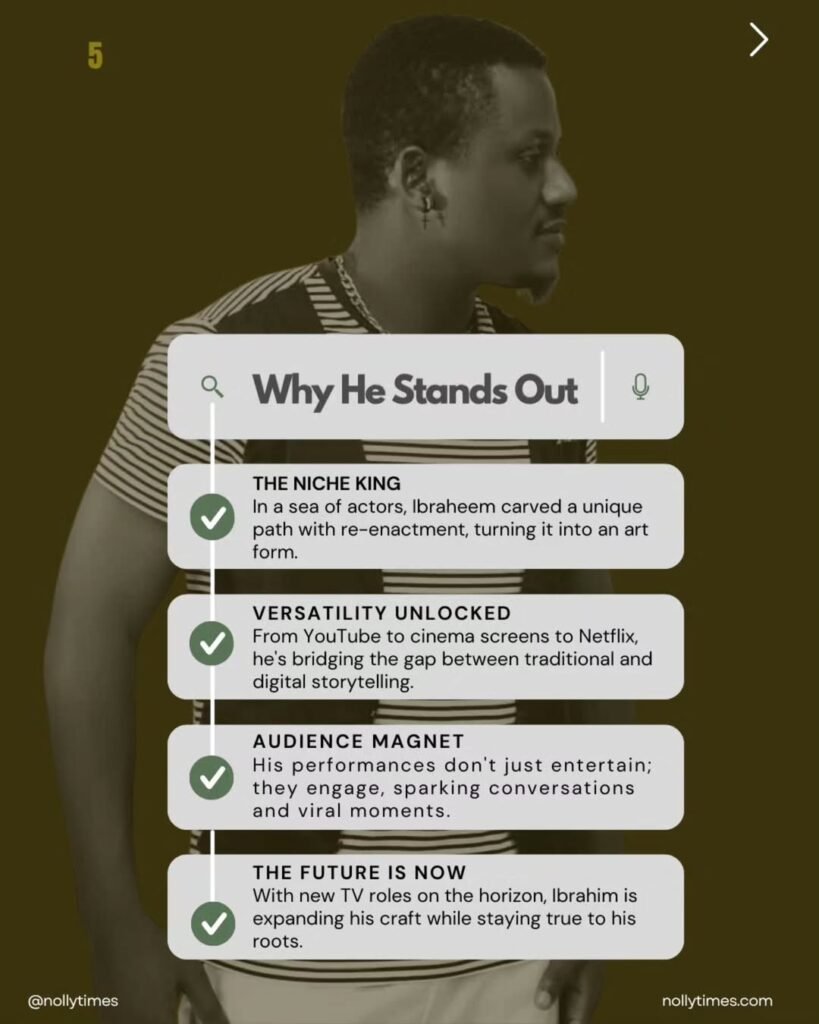
A native of Osun State and a History and Education graduate of Obafemi Awolowo University, Ibraheem Lateef Adebayo entered performance with an academic foundation that shaped his approach to his work. He did not arrive through a conventional audition pipeline. He arrived through re-enactment, the deliberate, studied recreation of memorable scenes from Nollywood films, and he did it with enough precision and emotional intelligence that people took notice.
Re-enactment, as Ibraheem Lateef Adebayo practises it, is not mimicry. It is an interpretation. He has described the process as stepping into real emotions rather than copying surface-level behaviour, studying voice, timing and physical expression to give familiar moments a new life for audiences encountering them again. That distinction between imitation and interpretation is what separated his work from others attempting the same format and what earned him the recognition he now carries as one of the most distinctive performers in Nollywood’s digital era.
By 2024 and 2025, that reputation had extended well beyond social media. His role as Ara Egba in Lisabi, produced by the Adedimejis, marked a significant point in his transition from digital creator to credible screen presence. The performance demonstrated range and confirmed that the discipline he had applied to re-enactment translated equally to original character work. He has since moved across YouTube content, cinema and television, occupying a position that bridges Nollywood’s traditional and digital audiences.
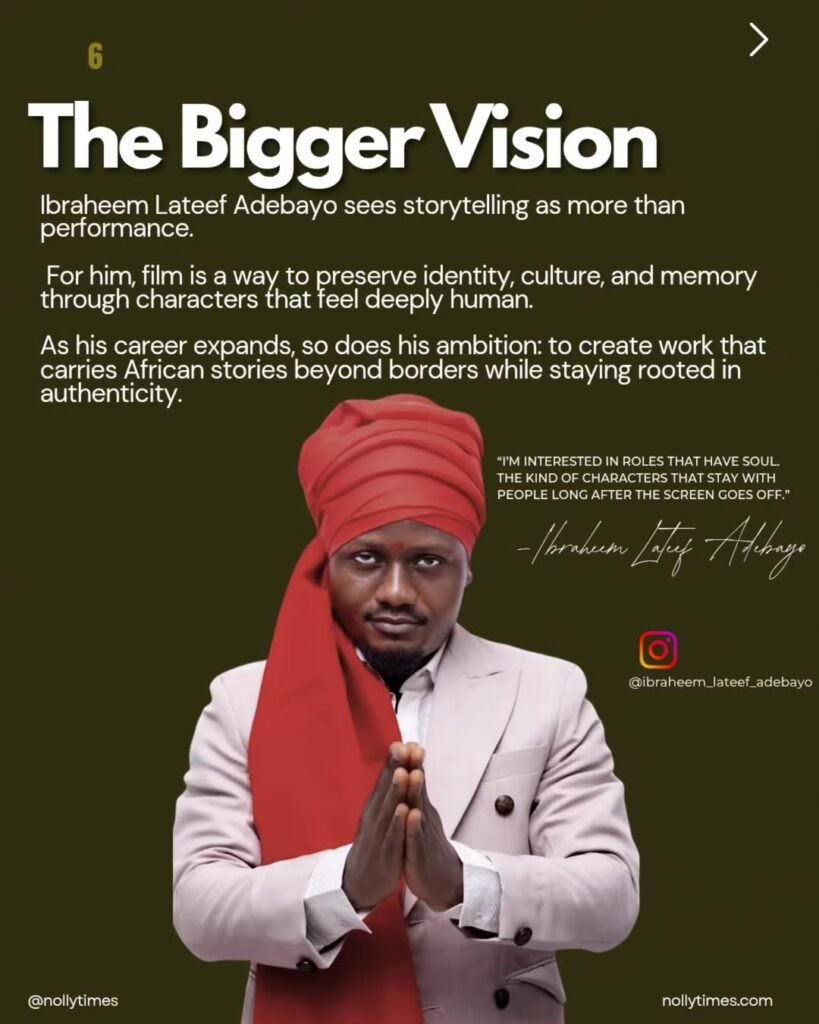
His stated ambition is equally considered. Ibraheem Lateef Adebayo has spoken about wanting roles with soul, characters that stay with audiences after the screen goes off and about using film as a means of preserving African identity, culture and memory. For someone who built his career through recreation, the direction is now firmly original: stories that belong to the continent and characters that reflect it honestly.
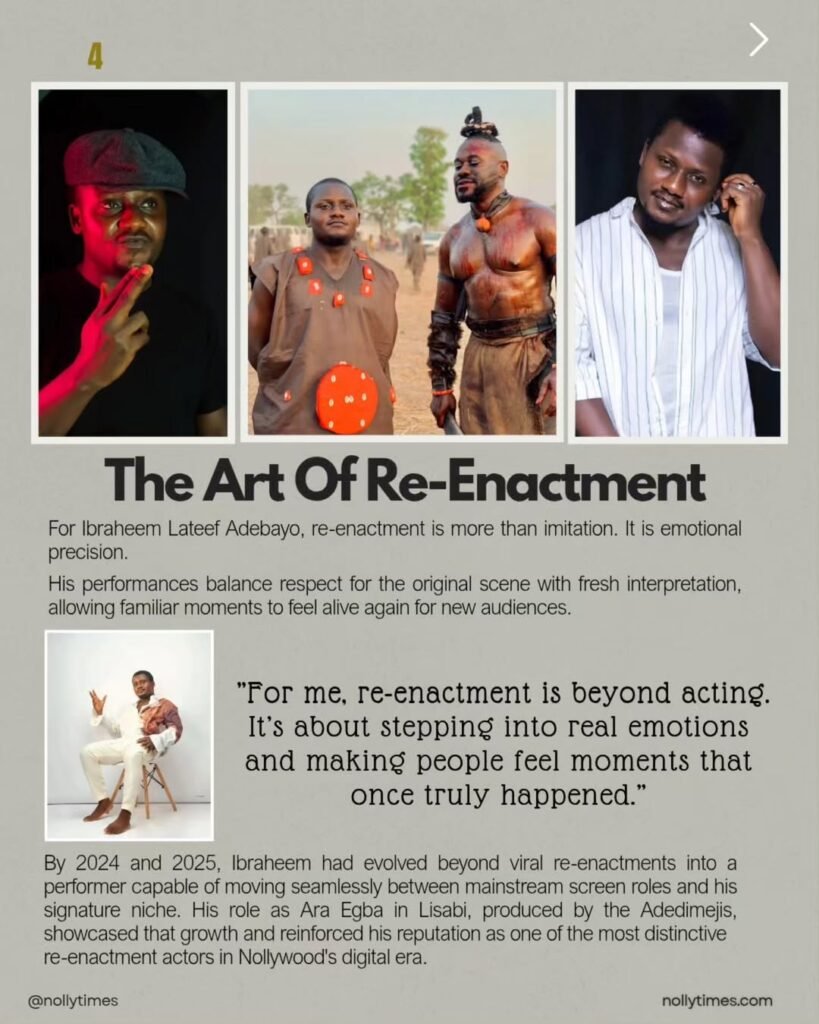
He did not wait for the industry to define what he could be. He defined it himself, one re-enactment at a time, and then grew beyond it.
Connect with Ibrahim Lateef Adebayo HERE